

"What a Wonderful World" — The Story Behind the Song We All Know
2nd Mar 2026
A Song Written for Dark Times
In 1967, America was tearing itself apart. The Vietnam War was escalating. Race riots swept through Detroit, Newark, and dozens of other cities. Martin Luther King Jr. and Robert Kennedy would both be assassinated the following year. For many Americans, the world didn't feel wonderful at all.
That's exactly why two songwriters sat down and wrote "What a Wonderful World."
Bob Thiele and George David Weiss wrote the song not as a denial of what was happening, but as a deliberate counterpoint to it. Weiss later said the song was intended to express the idea that the world is full of beauty if you choose to look for it — even when the headlines say otherwise.
They wrote it specifically for Louis Armstrong. Not as a generic pop song to be pitched around, but with his voice, his warmth, and his presence in mind. Armstrong was 66 years old, a living legend, and one of the most beloved musicians on the planet. If anyone could deliver a sincere message of hope without it feeling naive, it was him.
Louis Armstrong Loved It. His Record Label Didn't.
Armstrong recorded "What a Wonderful World" in a single session. By all accounts, he connected with the song deeply. He understood what Thiele and Weiss were going for — a reminder to slow down and notice the good in the world, even when the world seemed to be falling apart.
There was just one problem: Larry Newton, the president of ABC Records, hated it.
Newton thought the song was too slow, too sentimental, and too uncommercial. He wanted Armstrong recording upbeat numbers, not quiet ballads about trees and rainbows. According to Thiele, Newton was so opposed to the recording that he refused to promote it at all. No radio campaign. No marketing push. The song was effectively buried by the label that released it.
The result was predictable. In the United States, "What a Wonderful World" sold fewer than 1,000 copies. A complete flop by any measure.
Except It Wasn't a Flop Everywhere
Across the Atlantic, the song told a completely different story. In the United Kingdom, where ABC's domestic politics didn't apply, "What a Wonderful World" went straight to number one. It stayed on the UK charts for weeks and became one of the biggest singles of 1968 in Britain.
The song clearly resonated. It just needed someone willing to let people hear it.
The Second Life: Good Morning, Vietnam
Louis Armstrong died on July 6, 1971. He never saw "What a Wonderful World" become the American classic it is today.
For nearly two decades, the song remained a footnote in his catalog — beloved in the UK, virtually unknown in the US. That changed in 1987 when director Barry Levinson used it in the Robin Williams film Good Morning, Vietnam.
The placement was brilliant and devastating. Armstrong's warm, gravelly voice singing about green trees and red roses plays over footage of the Vietnam War — the very conflict that inspired the song's creation in the first place. The contrast between Armstrong's gentle optimism and the images on screen gave the song a weight it had never quite had before.
The film was a massive hit. The song was re-released as a single and climbed to number 32 on the Billboard Hot 100 — twenty years after its original release, seventeen years after Armstrong's death. The accompanying compilation album went platinum.
From that point on, "What a Wonderful World" became the song we all know. It has since been featured in countless films, commercials, TV shows, and graduation ceremonies. It's one of the most recognized recordings in the history of popular music — a song that was ignored in its own country, championed by another, and finally embraced by the world after its singer was gone.

What the Lyrics Actually Mean
The genius of "What a Wonderful World" is its simplicity. There's no metaphor to decode, no hidden message to unpack. Armstrong sings about trees, skies, clouds, sunsets, people saying hello, babies growing up. That's it.
And that's the entire point.
Thiele and Weiss weren't writing about some idealized version of the world. They were writing about the actual, everyday world — the one that's always there if you look up from the news long enough to notice it. Green trees still grow during wartime. Sunsets still happen during political turmoil. Babies are still born into chaos and somehow the people around them still feel hope.
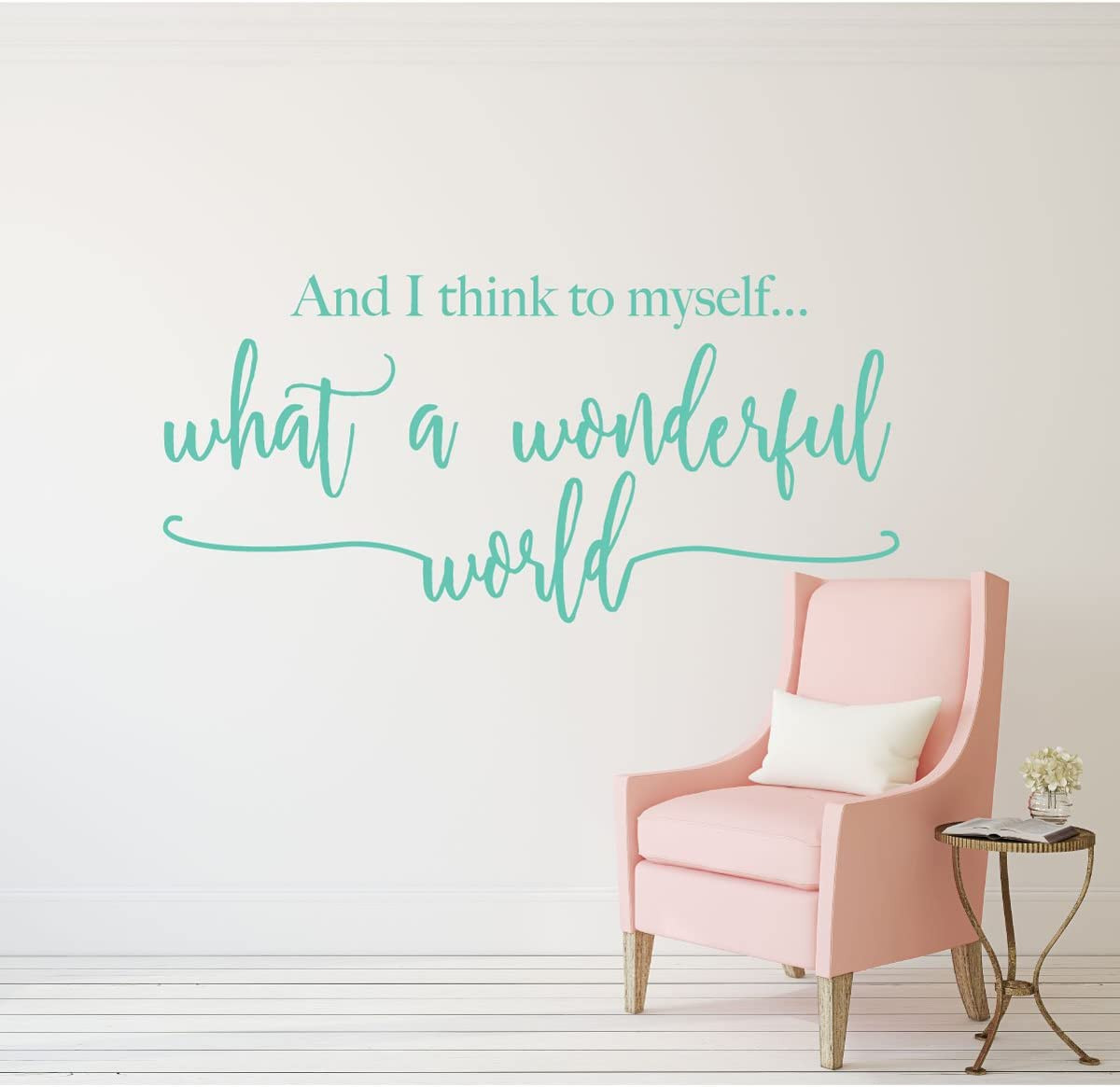
The most quoted line — "and I think to myself, what a wonderful world" — isn't a statement about the state of the world. It's a statement about choosing to see beauty in it. That distinction matters. The song doesn't deny suffering. It insists that wonder and suffering can coexist, and that noticing the wonder is an act of quiet resistance.
That's why the song hasn't aged. Every generation faces its own version of 1967. And every generation finds its own reason to need a reminder that the world, despite everything, still has trees and skies and babies and people who love each other.
Why People Put This Quote on Their Walls
"And I think to myself, what a wonderful world" is one of the most popular phrases in home decor — and not just because it's a famous lyric. The words carry a specific emotional weight that fits certain spaces and moments in a way few other quotes can match.
Nurseries and Children's Rooms
This is the most popular placement, and it makes perfect sense. A new baby is the most literal expression of "what a wonderful world" there is. Parents put this quote in nurseries because it captures exactly how they feel — that sense of awe and hope that comes with new life. It pairs beautifully with nature themes, woodland nurseries, and soft, calming color palettes. If you're designing a nursery or children's room, this quote adds a layer of meaning that generic decor can't match. For more ideas, see our guide to nursery wall decor on a budget.
Memorial and Remembrance Spaces
"What a Wonderful World" is one of the most commonly played songs at funerals and memorial services. Families choose it because it reframes grief — instead of focusing on loss, it celebrates the beauty that the person experienced during their life. The same logic applies to tribute walls and remembrance corners at home. A framed photo next to these words says something powerful without needing explanation.
Living Rooms and Entryways
Some people display the quote simply because it makes them smile. In an entryway, it's a gentle reminder before you walk out the door. In a living room, it sets a tone for the entire home — one of gratitude, warmth, and intentional optimism. It works especially well as part of a gallery wall alongside family photos.
As a Gift
This quote is a go-to for meaningful gifts: baby showers, Mother's Day, grandparent gifts, housewarming presents, and sympathy gifts. It works across nearly every occasion because the sentiment is universally resonant. A vinyl wall decal of "What a Wonderful World" makes a particularly thoughtful gift because it's personal, lasting, and something most people wouldn't buy for themselves.
Displaying Lyrics You Love
There's a reason song lyrics end up on walls more than almost any other type of quote. Songs carry emotional memory in a way that standalone quotes don't. You don't just read the words — you hear them. You hear Armstrong's voice. You remember where you were when the song mattered to you.
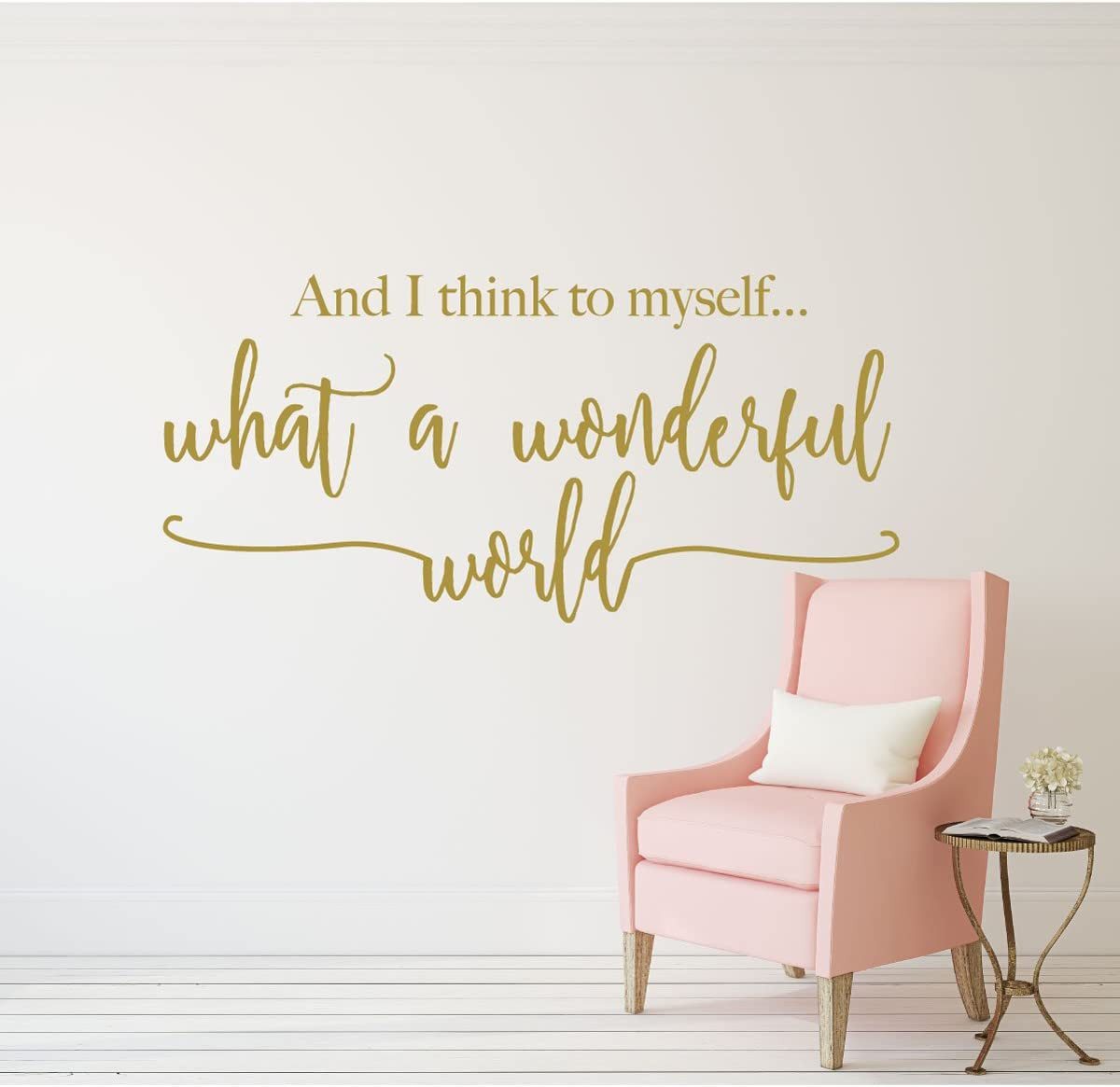
Vinyl wall decals are one of the best ways to display a lyric like this because they look intentional and clean — more like a design choice than a poster taped to the wall. They apply in minutes, come off without damaging paint, and are available in sizes and colors that fit any room. Whether you want small script above a crib or a large statement piece in a living room, a decal adapts to the space.
If you're drawn to quotes with genuine meaning and backstory, you might also enjoy our collection of inspirational quote wall decals. And for nurseries specifically, we have an entire children's room collection with designs that pair beautifully with this sentiment.
A Song That Almost Never Was
It's strange to think about how close this song came to disappearing entirely. One record executive's personal taste nearly erased what would become one of the most beloved recordings of the 20th century. If not for the UK charts keeping it alive, and a filmmaker who understood exactly how to use it two decades later, "What a Wonderful World" might have stayed in the reject pile.
Instead, it's everywhere. It plays at weddings and funerals. It's quoted in graduation speeches and printed on nursery walls. It's become the soundtrack for the moments when people want to pause and appreciate what's right in front of them.
Armstrong's voice is gone, but his reminder isn't. Green trees. Red roses. Blue skies. Friends shaking hands. Babies crying. And somewhere, someone thinking to themselves: what a wonderful world.
For more quotes with real stories behind them, read our posts on "Hard Work Beats Talent" and who really said it, or explore 30 Bible verses for your home, room by room.
