
Hard Work Beats Talent Quote — Who Said It & What It Means
20th Feb 2026
The Full Quote and Who Really Said It
"Hard work beats talent when talent doesn't work hard."
You've probably seen this quote on a locker room wall, heard a coach say it before a big game, or spotted it on someone's home gym wall. It's one of the most popular motivational quotes in sports — but most people have no idea who actually said it first.
It wasn't Kevin Durant. It wasn't Tim Tebow. The original quote is attributed to Tim Notke, a high school varsity basketball coach. Beyond that, not much is known about Notke himself. No Wikipedia page. No famous coaching record. Just one sentence that took on a life of its own.
The quote likely dates back to the 1980s or early 1990s. We know this because Tim Tebow told the Tampa Bay Times in 2010 that the quote had been posted on his bedroom door since he was six years old — which would have been around 1993.
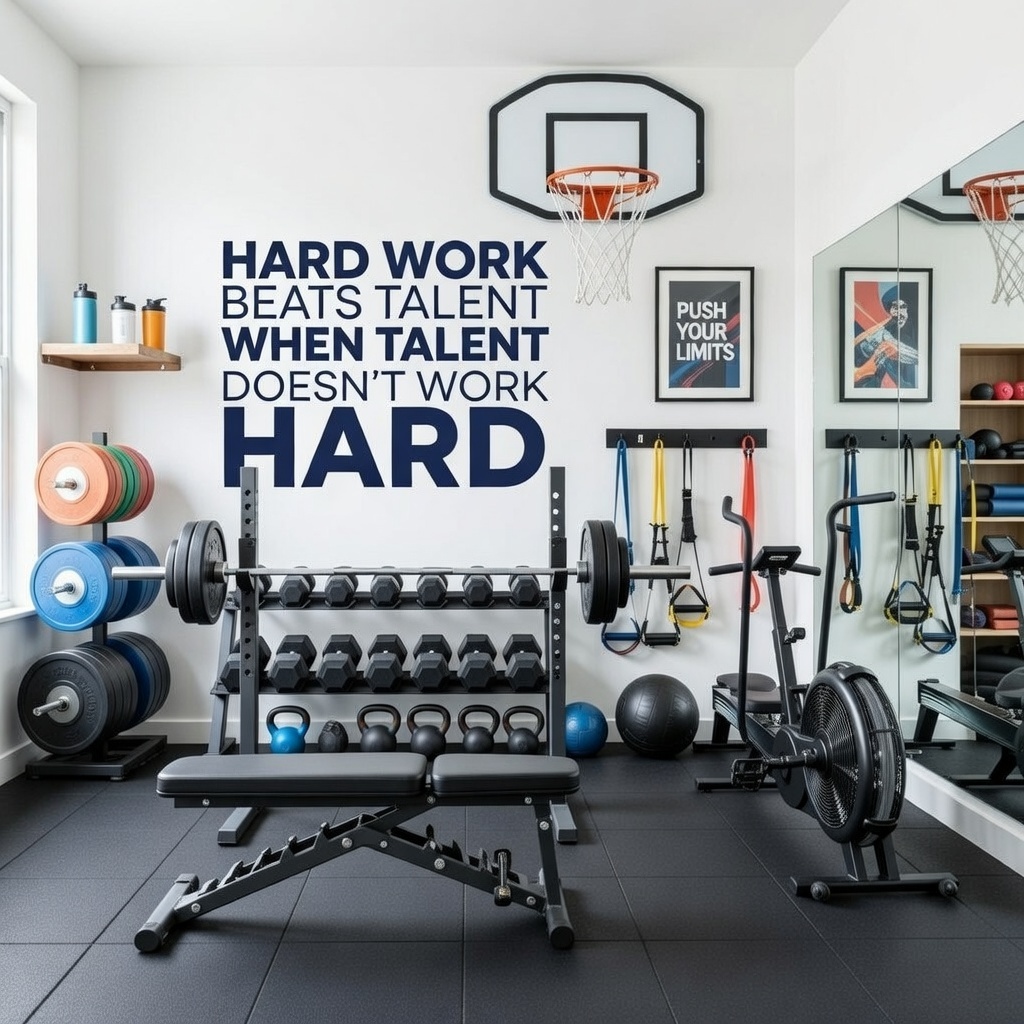
How Kevin Durant Made It Famous
The quote might have stayed in high school gyms forever if Kevin Durant hadn't picked it up.
On January 4, 2012, Durant — already an NBA All-Star and future MVP — tweeted from his account @KDTrey5: "My favorite quote is 'Hard work beats talent when talent fails to work hard.' Following that has helped me reach my goals."
Notice his version uses "fails to work hard" instead of "doesn't work hard." Both versions are widely used today.
Durant's entire career backs up the quote. His 2014 MVP acceptance speech — the famous "You the real MVP" moment for his mother Wanda — was built around sacrifice, struggle, and relentless work. His mother worked multiple jobs. The family went without so her sons could chase their goals. Talent got KD noticed. Work ethic made him a champion.
Tim Tebow: Living the Quote Since Age 6
While Durant popularized the quote on social media, Tim Tebow may have the longest personal history with it. He told reporters in 2010 that the quote had been posted on his bedroom door since he was six years old.
Tebow has continued to champion the message throughout his career — from college football to the NFL to professional baseball. In 2023, he posted: "We might not always be the most talented in the room, but when we show up and put the hard work in, willpower can beat talent any day."
The quote clearly shaped how both athletes approached their craft. And they're not alone — coaches and athletes across every sport have adopted it as a guiding principle.

Why This Quote Resonates: The Science Behind It
This isn't just a feel-good saying. There's real research behind why hard work consistently outperforms raw talent.
Growth Mindset (Carol Dweck, Stanford)
Psychologist Carol Dweck spent decades studying what separates high performers from everyone else. Her conclusion: it's not ability — it's belief about ability.
People with a growth mindset believe their skills can improve through effort. People with a fixed mindset believe talent is something you're born with. Dweck's research found that athletes who believed their ability came from effort and practice consistently outperformed those who believed it was innate.
"Hard work beats talent" is essentially the growth mindset condensed into one sentence.
Grit (Angela Duckworth, University of Pennsylvania)
Angela Duckworth defines grit as "passion and perseverance for long-term goals." Her research found that grit — not IQ, not physical fitness, not test scores — was the strongest predictor of success across dramatically different settings.
At West Point, grit scores predicted which cadets would survive the brutal six-week Beast Barracks program better than SAT scores, GPA, or physical assessments. In the National Spelling Bee, grittier kids advanced further than more naturally talented ones.
The pattern is consistent: sustained effort beats natural advantage when natural advantage isn't backed by effort.
Deliberate Practice (K. Anders Ericsson, Florida State)
Researcher K. Anders Ericsson studied expert violinists and found that the difference between good and world-class wasn't talent — it was the amount and quality of focused practice. His work was later popularized (and somewhat oversimplified) as the "10,000-hour rule" in Malcolm Gladwell's Outliers.
The key insight: talent sets a starting point, but deliberate practice determines how far you go. The "when talent doesn't work hard" part of the quote captures exactly this. Talent without effort is potential wasted.
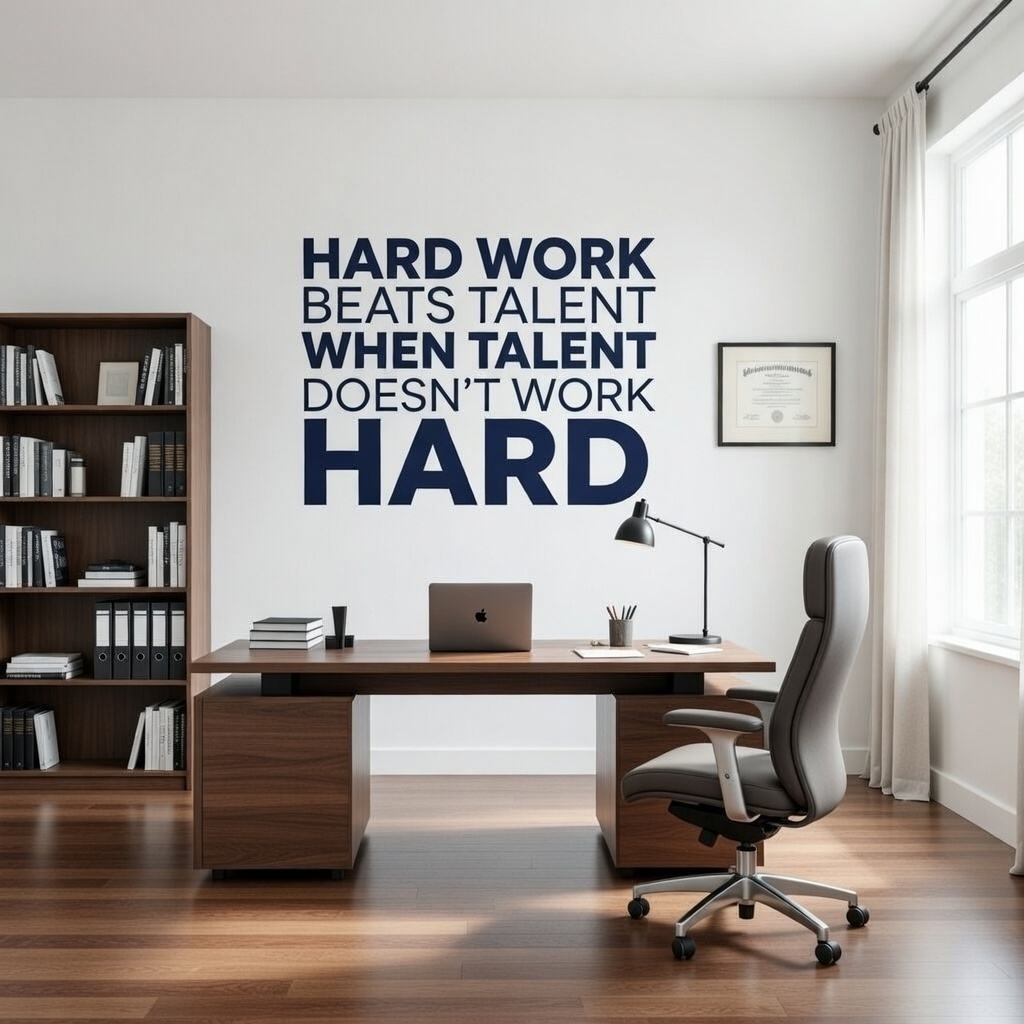
Where People Display This Quote
Walk into enough home gyms, bedrooms, and training facilities and you'll see this quote everywhere. The most popular places people put it:
- Home gyms and workout spaces — the most popular spot by far. Positioned where you can see it mid-rep when you want to quit.
- Kids' and teens' sports bedrooms — especially rooms themed around football, basketball, baseball, or soccer. Parents use it to reinforce work ethic early.
- Locker rooms — both youth sports and private training facilities. Coaches put it where athletes see it before every practice and game.
- Home offices — the quote applies well beyond sports. Entrepreneurs, students, and remote workers use it as a daily reminder.
- Classrooms — teachers display it to encourage students who feel outmatched by "naturally smart" classmates.
Vinyl wall decals are one of the most popular ways to display this quote because they're easy to apply, look clean on any wall color, and come off without damage — which matters when kids grow up and tastes change. They're available in dozens of colors and sizes to fit any space, from a small accent above a desk to a large feature wall in a gym.
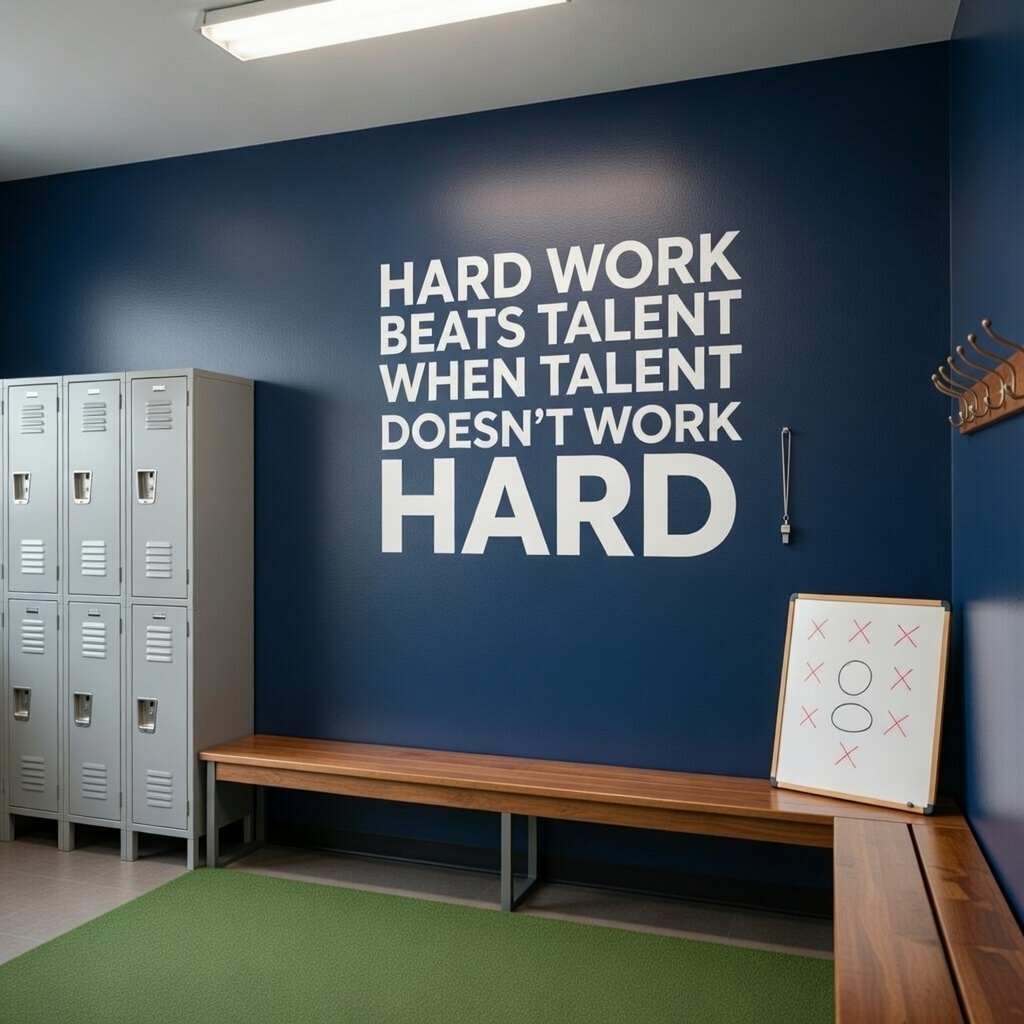
The Full Quote and Common Variations
The original, most widely attributed version:
"Hard work beats talent when talent doesn't work hard."
— Tim Notke
Kevin Durant's version:
"Hard work beats talent when talent fails to work hard."
Other popular variations you'll see:
- "Hard work beats talent when talent refuses to work hard."
- "Hard work beats talent every time."
- "Talent is never enough. With hard work, talent becomes unstoppable."
The core message is always the same: talent alone isn't enough. The person willing to outwork everyone else has the edge.
What This Quote Really Means
It's worth noting what the quote doesn't say. It doesn't say talent is worthless. It doesn't promise that hard work always wins. The key phrase is "when talent doesn't work hard" — it's conditional.
The honest truth the quote captures: in most rooms, the most talented person and the hardest-working person aren't the same person. And when they're not, the worker has the advantage more often than you'd think.
That's why this quote has stuck around for 30+ years and made its way from a high school gym to the walls of NBA arenas, college dorm rooms, home offices, and kids' bedrooms around the country. It's a reminder that effort is the one thing you can always control.
If you enjoyed this deep dive, check out our post on who really said “Whatever you are, be a good one” — another famous quote almost never attributed to the right person. Browse our full collection of inspirational quote wall decals to find the perfect motivational saying for your wall.
